Johnny Vedmore discusses Laurie Ann Paul’s dystopian suggestion during the Epstein-funded Edge event, HeadCon’14.

“We’re going to pretend that modern-day vampires don’t drink the blood of humans; they’re vegetarian vampires, which means they only drink the blood of humanely-farmed animals. You have a one-time-only chance to become a modern-day vampire. You think, “This is a pretty amazing opportunity, but do I want to gain immortality, amazing speed, strength, and power? Do I want to become undead, become an immortal monster and have to drink blood? It’s a tough call.” Then you go around asking people for their advice and you discover that all of your friends and family members have already become vampires. They tell you, “It is amazing. It is the best thing ever. It’s absolutely fabulous. It’s incredible. You get these new sensory capacities. You should definitely become a vampire.” Then you say, “ Can you tell me a little more about it?” And they say, “You have to become a vampire to know what it’s like. You can’t, as a mere human, understand what it’s like to become a vampire just by hearing me talk about it. Until you’re a vampire, you’re just not going to know what it’s going to be like.”
Read Epstein’s School of Shame for the full coverage of HeadCon ’14:
Extract from Johnny Vedmore’s article Epstein’s School of Shame:
The Edge Foundation was not simply a forum for elite scientists to discuss what interested them most; a clear agenda was at play. The Masterclasses and Seminars tackled three main subjects: how to alter or affect human cells and genes; how to predict the future social order; and how to change people’s decision-making and behaviour. If you were to question any of the Large Language Models about Edge’s major events, they’ll currently tell you that everything was innocent and professional. They are also very quick to belittle and dismiss the uncomfortable fact that much of Edge’s activities were funded by Jeffrey Epstein.
Between 2001 and 2015, John Brockman’s Edge Foundation, Inc, has acknowledged that the organisation received at least $638,000 from Jeffrey Epstein and Epstein-controlled foundations. During the period in question, from 2011 to 2015, Edge received $200,000 alone to fund the study of extremely controversial and questionable subject matter directly related to controlling human behaviour at scale. This period is also extremely notable because it is after Jeffrey Epstein was convicted of child abuse.
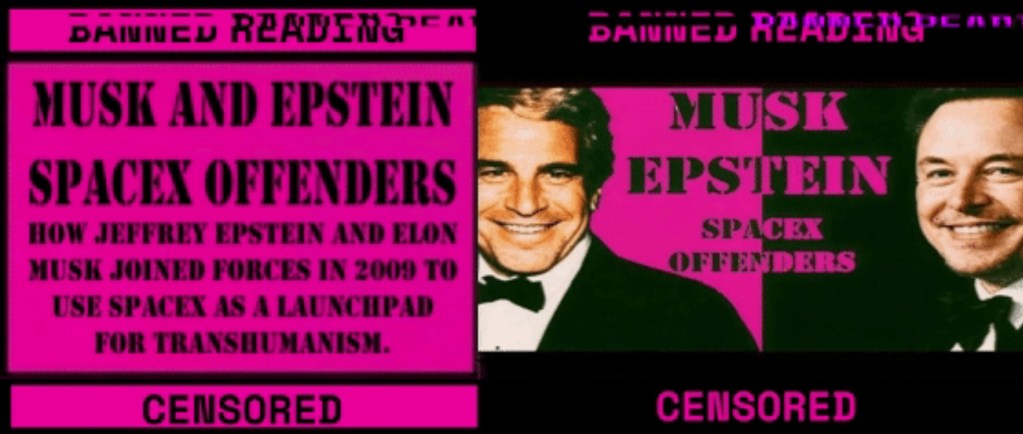
In my first articles covering the Edge Foundation’s courses, I examined Elon Musk’s involvement in the Edge Masterclasses in 2008 on Behavioural Economics and, in 2009, the Edge Masterclass on Synthetic Genomics. These two courses focused on behavioural change and genome reprogramming, respectively. Some of these seminars had very questionable sections, including the section in 2008 entitled “The Psychology of Scarcity”, and 2009’s section on “Humans 2.0”, which has since been deleted from the records. Again, well-programmed AI models will present this information in a positive, optimistic manner, regardless of the connotations. The most infamous child-abusing intelligence asset in human history was funding the study of extremely controversial science.
L.A. Paul – The Vegetarian Vampire Skit
“We’re going to pretend that modern-day vampires don’t drink the blood of humans; they’re vegetarian vampires, which means they only drink the blood of humanely-farmed animals. You have a one-time-only chance to become a modern-day vampire. You think, “This is a pretty amazing opportunity, but do I want to gain immortality, amazing speed, strength, and power? Do I want to become undead, become an immortal monster and have to drink blood? It’s a tough call.” Then you go around asking people for their advice and you discover that all of your friends and family members have already become vampires. They tell you, “It is amazing. It is the best thing ever. It’s absolutely fabulous. It’s incredible. You get these new sensory capacities. You should definitely become a vampire.” Then you say, “ Can you tell me a little more about it?” And they say, “You have to become a vampire to know what it’s like. You can’t, as a mere human, understand what it’s like to become a vampire just by hearing me talk about it. Until you’re a vampire, you’re just not going to know what it’s going to be like.”
The speakers at Edge’s HeadCon ‘14 get progressively more controversial. In the Edge Masterclass on Synthetic Genomics held at SpaceX—which was part funded by Elon Musk and part funded by Jeffrey Epstein—there was a section on “Humans 2.0”, which is one of the rare Edge talks which have been deleted from all the records. It discussed a science many of these scientists believe will emerge within the next few decades: the ability to reprogram your genome as though you were a computer.
(Listen to Laurie Ann Paul’s HeadCon ‘14 talk below. I encourage you to download the audio.)
While Molly Crockett was eager to talk about the use of the behavioural-altering drugs of the future, there is little to no debate about whether such interventions should be used; instead, their use is treated as a given. If a significantly advanced technology emerges, will it be used automatically, whether or not it benefits wider society in the short or long term? Is a paradigm-shifting technology’s use initially triggered by the academic scientific community’s want to experiment on the general public?
One of the key issues with modern science is that the professionals involved require human experimentation to prove what they assert. This often starts by presenting the public with a question which allows them to ponder the potential paradigm shift. They are encouraged to consider the potential benefits which will never truly be available to them. In fact, reality will still resemble the two-tier society in which John Brockman, Jeffrey Epstein, and the attendees of their Billionaire’s Dinners were beneficiaries.
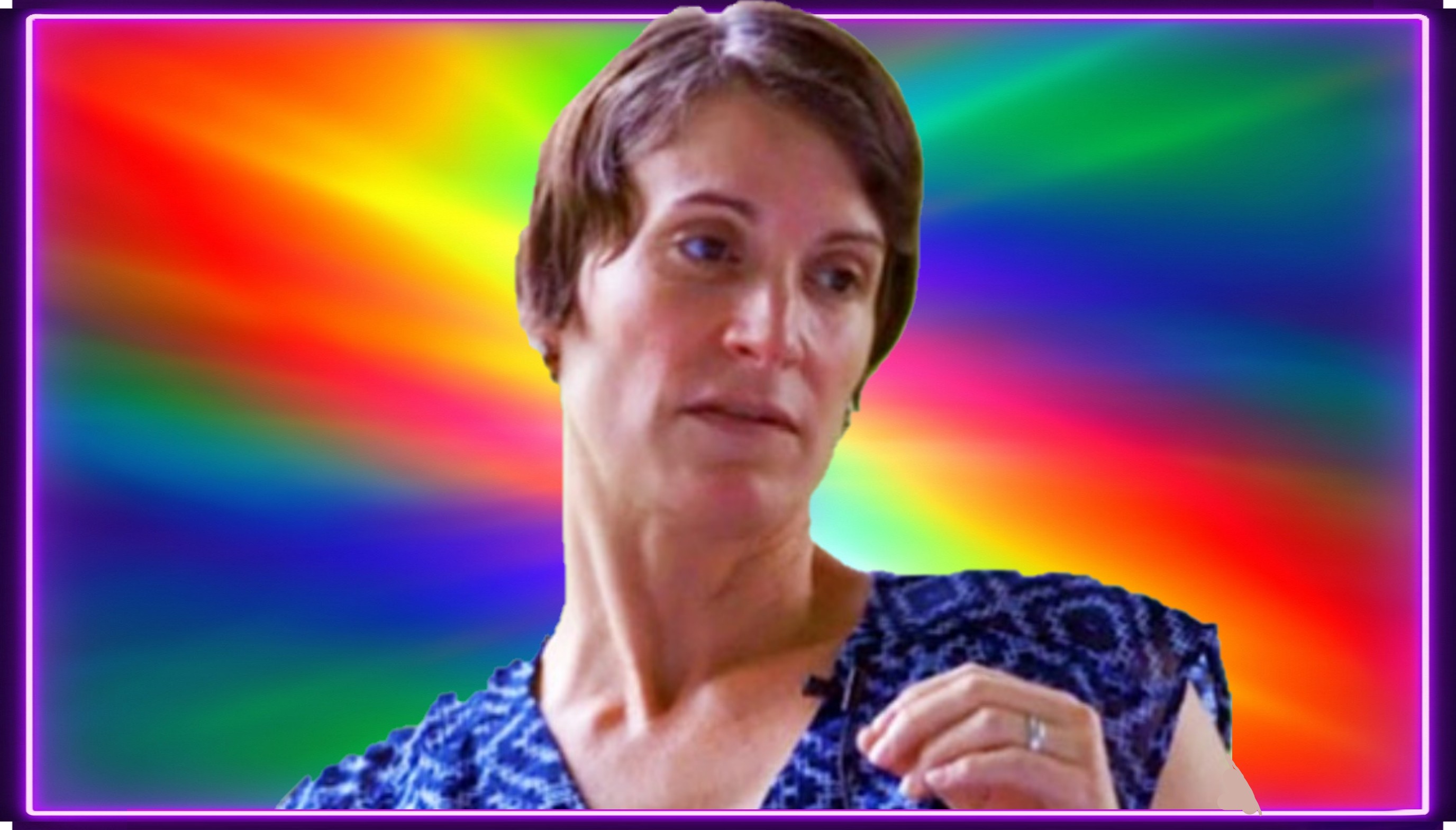
Laurie Ann Paul’s talk at HeadCon ‘14 was entitled “The Transformative Experience”, and at the time of HeadCon, Paul was Professor of Philosophy at the University of North Carolina at Chapel Hill, as well as being a Professorial Fellow in the Arché Research Centre at the University of St. Andrews. She studied at Antioch College and Princeton University and, at this time, was the author of Causation: A User’s Guide (with Ned Hall) and the Transformative Experience. She is now Professor of Philosophy and Cognitive Science at Yale University.
Like Molly Crockett and many other speakers at the Edge Foundation, Laurie Ann Paul is now involved in planning for AI. Paul’s CV shows that she is part of the “Yale Taskforce on Artificial Intelligence (YTAI), focused on determining the impact of AI on Yale’s research, scholarship and operations and defining a strategic vision for AI at Yale.” Crockett and Paul are among the key scientists tasked with giving Artificial Intelligence a human face, or synthetic soul, whichever you prefer.
Laurie Ann Paul’s Transformative Experience theory is difficult to explain in shorthand, and you should listen to her presentation. Yet, Paul herself described it as:
“Transformative experiences involve radical personal and epistemic change; an agent’s decision to undergo one “must either be authentic or irrational, but not both”; it walks through the concepts, the problems for rational decision-making, and key examples.”
Some of the critics of Paul’s theory say it deliberately conflicts with the orthodox model of rational choice and the common way of thinking about major life decisions. Paul’s theory challenges the ordinary, intuitive approach the vast majority of people will take to big personal life decisions such as having children or major medical interventions. However, Paul is correct that the standard model of her science is not fit for purpose. The technologies which are being developed today to predict the behaviour of seemingly irrational agents are based on falsification. Which brings us to Michael McCullough.
If you want to read the transcripts of Laurie Ann Paul’s HeadCon ‘14 seminar on “The Transformative Experience” follow the link included.


Make a one-time donation
Make a monthly donation
Make a yearly donation
Choose an amount
Or enter a custom amount
Your contribution is appreciated.
Your contribution is appreciated.
Your contribution is appreciated.