
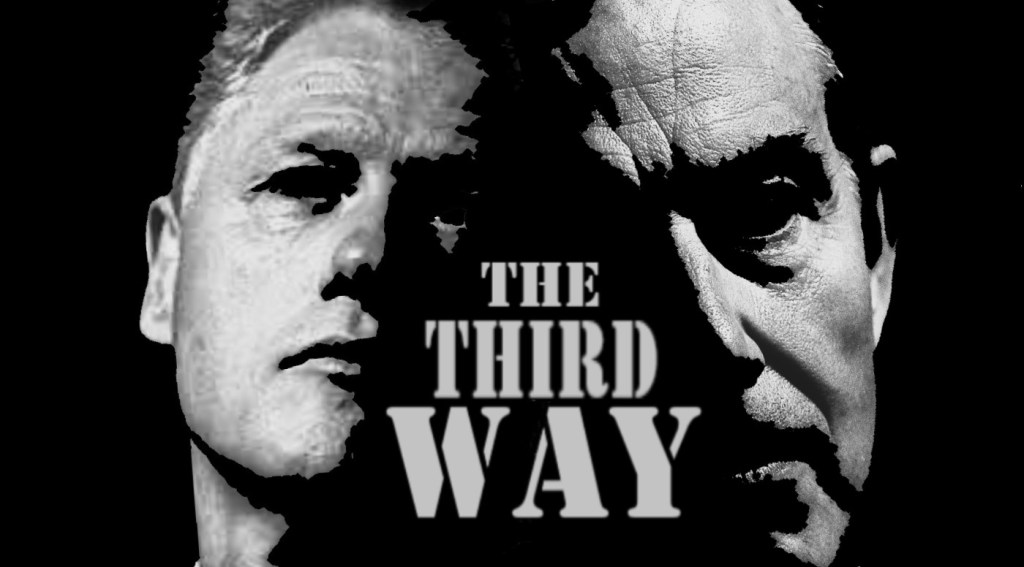
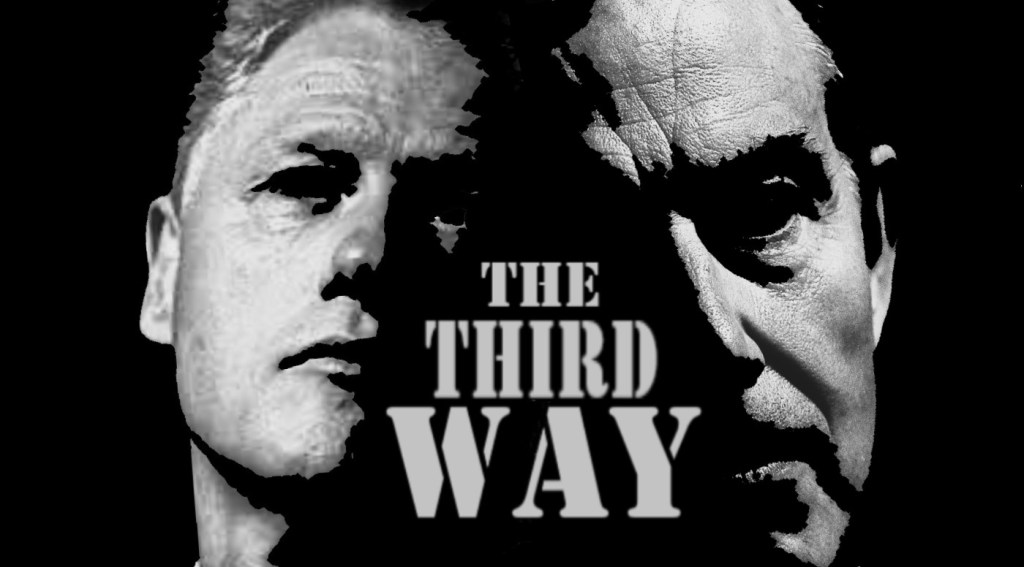
This is how British and American politicians deserted their left-wing political leanings to implement a new centre-ground political ideology. The “Third Way” politics, which both Clinton and Blair adopted into the Democratic Party and the Labour Party respectively, saw the suppression of the left and right wings and began to synthesise the two nations into a singular ideological pole of far-west Globalism.
Written by Johnny Vedmore with Key Researcher Darren Kenton
Listen to the Read Through of the Article
The political powder keg of the Western world has been purposely rigged to explode, with our societies primed to be decimated as a result. The far right is on the rise, and the far left will surely follow. The predictable ascendency of the two wings of the political spectrum is the direct consequence of a certain ideology. Its success has seen all major political parties in the United States and the United Kingdom lurch towards the centre ground, while at the same time purging and suppressing the natural left and right wings of their own political parties. This is the story of how a handful of elite politicians and sociologists have led us to a state of deep division and perpetual unrest.
There are only a handful of leaders who have had such an enormous impact on shaping the world we live in as the former British Prime Minister, Tony Blair, and his American counterpart, Bill Clinton. Some of the consequences of their actions while in office will reverberate around the world for decades to come. In this article we’ll trace the training of the New Labour elite via a range of programs, including Rockefeller-founded deep-state leadership programmes, official American election campaigns, and via courses emanating from prestigious universities such as Harvard.
From as early as 1984, the future New Labour top brass were being systematically selected and trained within the halls of elite universities such as Harvard and MIT, where they were being directly influenced by movers and shakers such as Larry Summers, Robert Reich and Bill Clinton. This new wave of centre-left politicians was being influenced by an alternative political ideology, or maybe it should be referred to as a new political magic trick, called the “Third Way”. Its creator Anthony Giddens was once described as “the originator of Tony Blair’s ‘Third Way’ politics” by Daily Mail journalist Michael Seamark, and Giddens’ influence on the relationship which formed between America and Britain cannot be understated.
When Tony Blair was elected as Prime Minister, he didn’t only align the United Kingdom with American foreign policy, Blair also aligned the UK with Bill Clinton’s New Democrat version of Third Way centrism. This is the story of how Blair and Clinton used Giddens’s teachings to force the US and UK to become a far-Western pole of multi-polar Globalism.
The Political Rise of Tony Blair
In May 1982, the Guardian newspaper described a 29 year old barrister who was standing for election in Beaconsfield, England:
“The Labour candidate, hoping at least to hold on to second position, is Mr Tony Blair (Durham Cathedral School, Fettes College and Oxford), a 29-year-old barrister, facing his first Parliamentary contest. If Beaconsfield Labour Party had been able to choose from a whole world of political aspirants, it could hardly have found a young man more agreeably attuned to the constituency. At the mention of Mr Benn, he merely bows his head, says that he does not agree with him, and suggests that there is now a steady move in the Labour Party away from regarding him as a focal point for radical reform. Mr Blair did not vote for Mr Benn in the deputy leadership election – in fact, he didn’t vote for anybody.”
The young Tony Blair was strategically distancing himself from the well-respected Tony Benn, who had been a driving force of the Labour Party of yesteryear. However, this young Labour Party upstart was not going to take a Tory stronghold like Beaconsfield simply by turning his back on Tony Benn. In that Election, the Conservative Party’s Timothy Smith won Beaconsfield with 23,049 votes, while Tony Blair finished in 3rd with a relatively weak 3,886 votes.
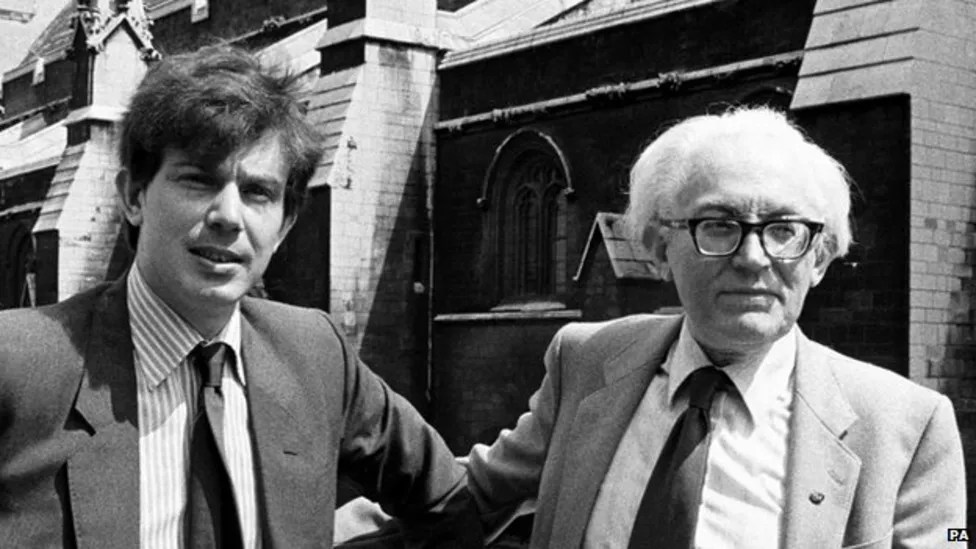
Soon after the Beaconsfield election was over, Tony Blair wrote the then Labour leader, Michael Foot. Blair told of his own journey to left-wing politics, while also suggesting that he was still searching for his own political home:
“Like many middle class people I came to Socialism through Marxism (to be more specific through Deutscher’s biography of Trotsky). The trouble with Marxism is that it is fine if you make it your political servant but terrible if it becomes your political master. I actually did trouble to read Marx first hand. I found it illuminating in so many ways; in particular, my perception of the relationship between people and the society in which they live, was irreversibly altered. But ultimately it was stifling because it sought to embrace in its philosophy every facet of existence. That of course is its attraction to many. It gives them a total perspective on life. But that can simply become an excuse to stop searching for the truth.”
Like many political leaders before him, Tony Blair was “searching for the truth”. He was trying to find a political ideology which could be welcomed by the Labour electorate, yet was detached from the Marxist teachings which had dominated left-wing British politics. In his communications with Michael Foot, Blair was attempting to sway the direction of the Labour Party by forming a closer relationship with its leader, who soon had Blair writing his speeches.
A year passed before Tony Blair stood again for a constituency, and on this occasion, he was successfully elected to Parliament. Blair was one of 20 people to be considered for the Labour nomination to run in Sedgefield. Michael Foot said of Blair:
“Everywhere he goes, he spreads interest, excitement and enthusiasm about the Labour Party, and this is the kind of candidate we want. Whatever the result, he is going to have a very big future in British politics, and will make a major contribution to the Labour Party.”
After a three-and-a-half hour selection process, the 118 Constituency Labour Party delegates for Sedgefield nominated Tony Blair as the party’s candidate for elections, with Les Huckfield, a former MP for Nuneaton, beaten by the young upstart. Sedgefield was a new constituency which had been formed from five others and was to see the Conservative Toby Horton face off against Tony Blair in the election proper. Blair was able to drum up a lot of publicity as he had married Cherie Booth, whose father, Tony Booth had starred in the hit UK comedy Til’ Death Do Us Part. Tony Booth’s partner was also a TV star. Pat Phoenix was a regular on the soap opera Coronation Street and hit the campaign trail to support Blair. He won the Sedgefield seat with an 8,281 majority over his Tory rival.
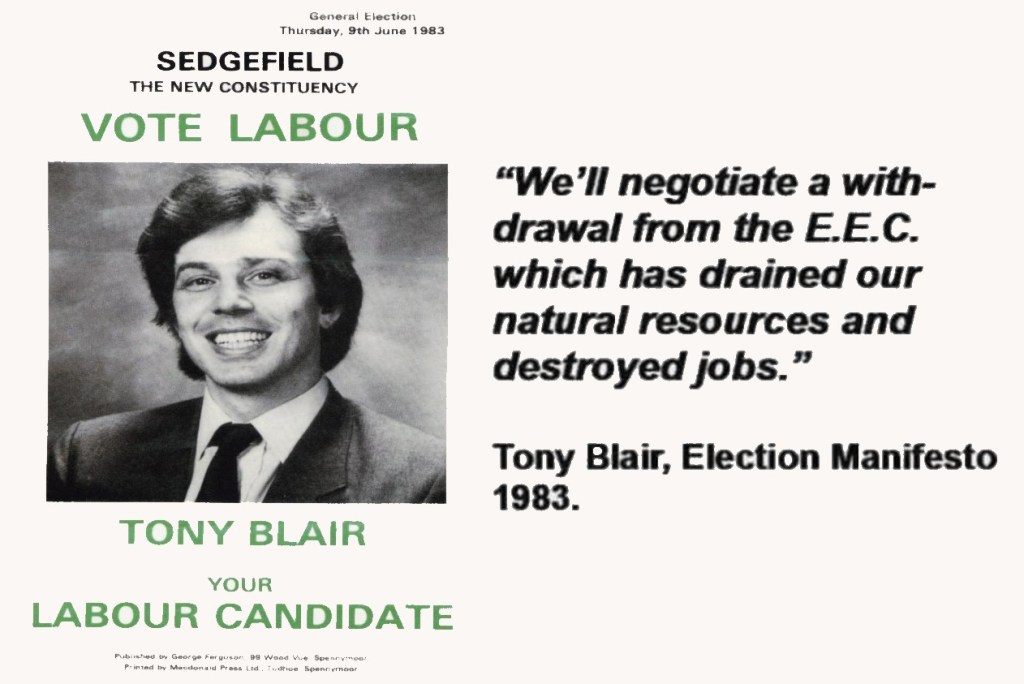
As the Labour Party conference of September 1983 began, it was this newly elected MP, from a newly created constituency, who was one of the loudest voices. On the 29th of September, an editorial by Blair was published in the Northern Echo, entitled: “Time is ripe for a Labour fight-back”, where Blair exclaims:
“Socialism is not starry-eyed but it is optimistic about people and the talent that they have, given the social circumstances in which those talents can prosper.”
Tony Blair’s local rival who was representing the Social Democratic Party for Sedgefield, David Shand, wrote a response to Blair’s editorials which begins:
“Tony Blair’s articles (September 22 and 29) display his growing mastery of the old political dirty tricks of innuendo, understatement and half-truth. Under our existing voting system Tony Blair emerged clear victor on June 9 but will he now acknowledge that only one third of the electorate voted for him. In other words, in what used to be known as a Labour heartland, two-thirds did not support him.”
Before long, Blair was modelling himself as a freedom fighter who was battling for the working class. He involved himself with the protests against the detention of Ismael Sena who was being held in a Uruguayan prison because of his years of trade union activities; he was hitting out at the dumping of nuclear waste in Billingham; while also sending a “hands-off our hospitals” warning to the Tory Health Minister. Then, in 1984, Blair received his first front-bench appointment as assistant Treasury spokesman, and soon he was being reported as a Treasury Spokesman, a position which had been occupied by Jack Straw and Roy Hattersley just prior.
Tony Blair was on the rise, and that rise was going to become meteoric. Also in 1984, Blair’s eventual Chancellor of the Exchequer, Gordon Brown was selected to travel to America, to take part in the International Visitor Leadership Program which was an American deep state creation, Blair was to follow in his footsteps in 1986. Although modern sources note that Blair only stood for the Shadow Cabinet in 1987, he was already being erroneously referred to as the Shadow Treasury Minister in April 1986, and he was becoming a regular addition to the Opposition Front Bench.
In November 1986, Blair became part of a task force to draw up a new jobs program for Labour. This task force included many of the people who were to eventually populate Blair’s cabinet, including Gordon Brown; Jack Straw; Clare Short; and Harriet Harman. Labour’s future generation was starting to design the policy of the Labour Party to come, it was only going to be a matter of time before their views clashed with the Labour Party of the past. As 1987 began, one thing seemed certain, Margaret Thatcher was going to call a general election. The newspapers started to tip Blair as one of the young Labour candidates who stood to gain from the coming General Election. Chris Moncrieff wrote in the Burton Mail:
“Who could be the political new names of 1987? One outstanding candidate is young Tony Blair, Labour MP for Sedgefield, and already a member of the Opposition front bench Treasury team. Tony has demonstrated an astonishing ability to master the most technical and complicated brief in a telling and comprehensive way. If I were a betting man, I would risk a modest sum on an early promotion to the Shadow Cabinet, and – if Labour win the next General Election – a speedy ascent up the ministerial ladder.”
The Young Upstarts
In August 1990, the current Home Secretary of the United Kingdom, Yvette Cooper, graduated from Balliol College, Oxford, with a degree in Philosophy, Politics and Economics. She was a bright young lady with lots of potential and had graduated with a first-class honours degree. The following year, Cooper won a Kennedy Scholarship to study at Harvard University putting her on course to be involved with the US election campaign of Bill Clinton’s New Democrats. However, after Yvette Cooper graduated from Oxford, she initially began working as an Economic Policy Researcher for the Labour Party Shadow Chancellor John Smith. The left in the United Kingdom were looking for inspiration. Thatcherism had decimated the old Fabian socialists of the past, and a new Fabianism had started to bubble away in the melting pot of youthful exuberance, and the potential future Labour leaders were all busy indulging in the Kool Aid.
With a lack of new ideas coming from a stagnating Labour Party, this new generation of potential Labour leaders started to look towards the United States for inspiration. By the end of the 1980s and the start of the 1990s, the future New Labour elite were busy studying their trade across the Atlantic.
The impetus for Labour’s American invasion was actually the then Delaware Senator, and future president of the United States, Joe Biden. In 1987, Biden was accused of plagiarising a speech during his first presidential campaign, which was stolen from Labour leader Neil Kinnock. The Democrats were clearly watching what the UK Labour Party was doing, and Kinnock had also been interested in the leftist American political scene, too. In fact, Labour’s next generation were all studying the American system. Labour’s Douglas Alexander had volunteered for the 1988 Michael Dukakis campaign, Gordon Brown had already attended the International Visitor Program in 1984, Tony Blair took part in 1986, David Miliband was studying at the Massachusetts Institute of Technology, while Ed Balls, as the historian Richard Carr put it:
“…could regularly be found chomping on a burger in Charlie’s Kitchen in Boston, reflecting on his latest chat with Robert Reich or Larry Summers at Harvard.”
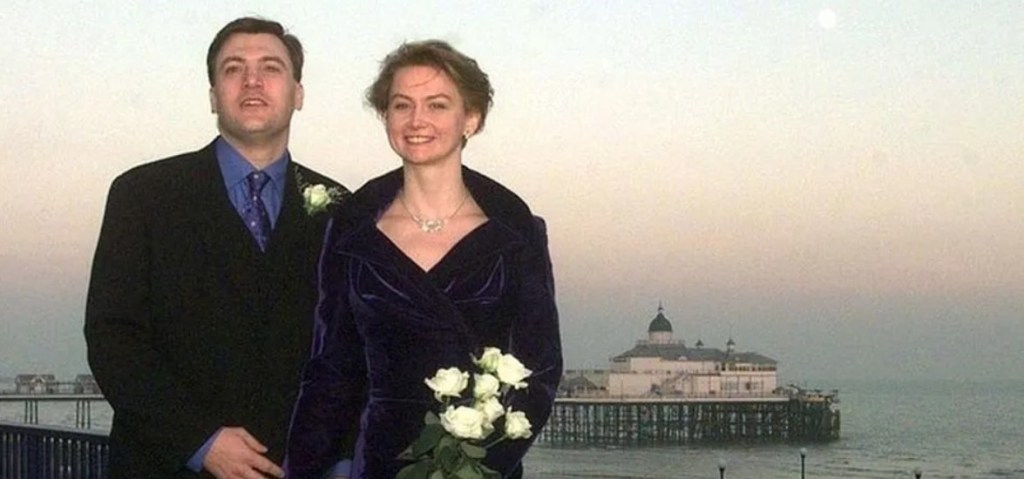
Ed Balls, who eventually married Yvette Cooper, had also studied at Oxford University, where he was not only a member of the Labour Club, but was also signed up to the Liberal Club and the Oxford University Conservative Association. In an Independent article, entitled: “How Ed Balls was a Tory under Thatcher”, Guy Adams quotes friends of Balls as saying:
“Ed hasn’t exactly advertised the fact, but he’s never sought to hide it either. It even featured in the jokes at his wedding. He joined the Tories at Oxford because they used to book top-flight political speakers, and only members were allowed to attend their lectures. Ed was, however, also a member of the Labour Club. He was more active in that, and was always, at heart, a man of the left.”
After leaving Oxford, Ed Balls took up a post as a Teaching Fellow at Harvard University between 1988 and 1990. He had originally gained a place in the UK Civil Service via a fast-stream scheme but had deferred the position for two years when offered the Kennedy Scholarship. In the last part of his time at Harvard, Balls was studying economics with Larry Summers, a former Harvard economics professor who went on to become the US deputy Treasury Secretary. Balls had made many significant connections while at Harvard, including in 1989 where he took a class taught by Robert Reich. Reich was a Democratic economist and thinker who later became Secretary of Labour under Bill Clinton.
As I covered in articles such as Dr Klaus Schwab: Or How the CFR Taught Me to Stop Worrying and Love the Bomb, Harvard had become a central base for American-led Globalism during the 1960s and 1970s, and this has continued to be the case ever since. By 1992, Yvette Cooper was based in America, as the aforementioned historian Richard Carr points out in his article for the official Fabian website, entitled, “Sweet Moderation”, which states:
“In November 1992, Bill Clinton, backed by New Labour’s Yvette Cooper (who survived on a diet of baked potatoes, sweetcorn and bananas when researching health and crime policies for the Democrats) and Philip Gould, advising on media strategy, finally proved that progressives could win again. Within weeks, Tony Blair and Gordon Brown were in New York and Washington, probing New Democrats like Al From and Sidney Blumenthal on the latest DLC and PPI think tank pamphlets. Though impressed by Brown’s detailed grasp of American politics, Blair appeared to Clinton pollster Stan Greenberg “like a Bill Clinton without all the complexity”. Their leader John Smith was less impressed, telling Peter Mandelson that “we don’t need any of this fucking Clinton stuff over here”. But he was too late: Blair and Brown had fully bought in.”
Carr also quotes Balls as accepting that the centre-left of politics had “to really accept globalisation, not uncritically, but with a mindset that broadly said it was a good thing that we needed to mitigate the risks of, rather than seek to avoid”. While at Harvard, Ed Balls reportedly told one of his professors that he was already “preparing to govern”. The latter quote comes from a multipart series for the Economist entitled: The American Connection, which also states:
“The transatlantic ties were strengthened further when several of Mr Balls’s Harvard gurus joined the Clinton administration. Larry Summers went to the Treasury; Lawrence Katz, a prominent Harvard labour economist was, for a while, chief economist at the Labour Department under Robert Reich, another Harvard man. The academics-turned-policymakers were now able to test their ideas in government. Messrs Brown and Balls, who visited Washington regularly, listened closely.”
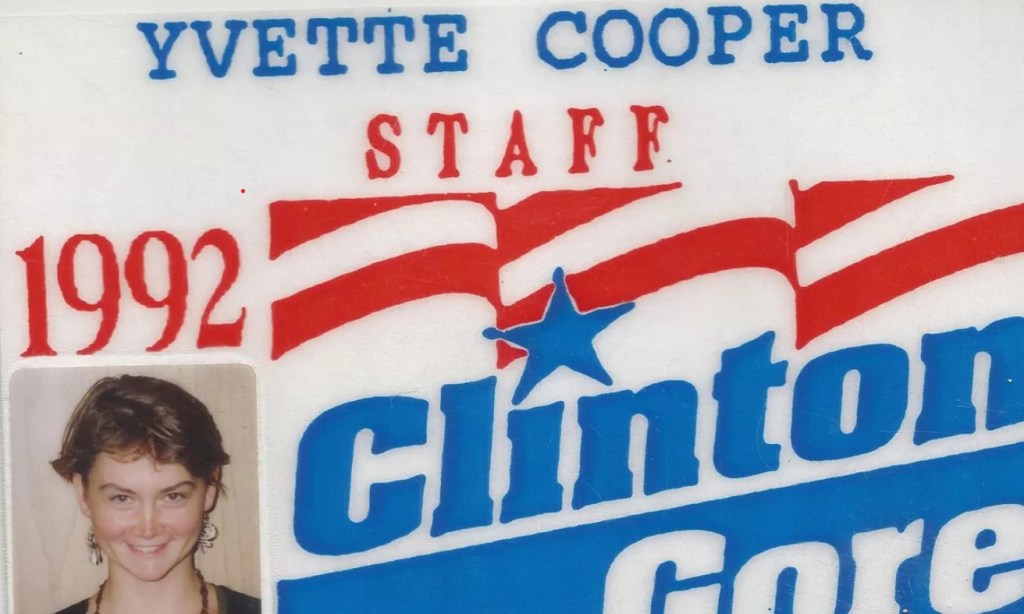
Larry Summers had become a great influence on Harvard’s left-wing British contingent throughout this period. However, it may have been Yvette Cooper’s work on the initial Clinton presidential campaign in 1992 which cemented the future close cooperation between the trans-Atlantic political left. An Independent article from March 1999, entitled, “Ed Balls, Treasury Adviser – Chancellor’s golden boy”, states:
“However, he [Ed Balls] married a woman who is, in the ways important for a successful long-term relationship, very similar to him, a match for his intellect and his beliefs. Cooper, too, spent some time at Harvard and worked with the Democrats in the 1992 US campaign.”
The 1992 Clinton campaign had an enormous influence on all of the Labour Party upstarts who were involved, and it wasn’t only Yvette Cooper who had been deeply embedded within the Clintonites during this period.
That year, the UK Labour Party were defeated by the Conservatives once again, a loss which was mainly put down to Labour’s income tax plans. In Richard Carr’s book, “March of the Moderates: Bill Clinton, Tony Blair, and the Rebirth of Progressive Politics”, the author writes:
“Though there remained some sceptics of the New Democrats, the election of Bill Clinton had certainly whetted Tony Blair and Gordon Brown’s appetite for change. In the first week of January 1993. both travelled to Washington DC where they met Democratic congressmen and members of the transition team. Larry Summers, Alan Greenspan and Sidney Blumenthal [the father of The Grayzone’s Max Blumenthal] would be amongst those to press the flesh with the two British politicians that week. This came at a time where, as the American press reported, ‘some Labour traditionalists are suspicious, labelling Clinton’s program [as] “Keynesian economics with an electric chair.”’ Yet, as the paper also noted, ‘many echo Gordon Brown’s feelings of “common roots” with Clintonites and his call for a “new settlement” sound very like Bill Clinton’s “new covenant”. The divisions this was opening up were by then obvious.”
In fact, there were many similarities between Clinton’s New Democrats and the Labour Party under the leadership of Neil Kinnock. In Alwyn W. Turner’s book, “A Classless Society: Britain in the 1990s”, the author states:
“There was a sense that Clinton was doing little more than Neil Kinnock had tried, chasing after focus groups and attempting to tailor policy to the supposed middle ground. ‘All the ideas from Clinton are an elite few running the party on the basis of the information they get from the poll,’ observed John Prescott in 1993. ‘That is not the way the Labour Party has been run, and while we tried it in the last couple of elections, it does seem to be that we lost, doesn’t it?’”
The following year, after Clinton had won the presidency, The World Economic Forum began its Global Leaders for Tomorrow leadership course—the precursor for their infamous Forum for Young Global Leaders. That first year saw Tony Blair, Gordon Brown, and Larry Summers become alumni, alongside Bill Gates, Richard Branson, Angela Merkel, Nicolas Sarkozy and many more. Blair and Brown were to be competitors for the Labour leadership the following year when the Labour leader John Smith unexpectedly died.
When John Smith won the leadership of the Labour Party, Tony Blair was already becoming a prominent face on the Opposition Front Bench. Blair’s desire to be the centre of attention was not always appreciated by John Smith or Gordon Brown, who were both reportedly left furious when Tony Blair appeared on the front cover of the Sunday Times magazine following Smith’s appointment as leader alongside the title – “The Leader Labour Missed”.
Third Way Rule
The Labour Party young guns who came to the fore during the late 1990s had no intention of representing the loyal Labour Party electorate of the previous era. Rather, they were preparing to surreptitiously incorporate a modern social democratic political ideology into the Labour Party, an ideology emanating directly from the American elite which would not only change the United Kingdom for the worse but also much of Europe. “The Third Way” is the centrists’ attempt to overcome the conflicts inherent between centre-right and centre-left political ideology. It attempts to merge together economic liberal thinking, social democratic economics, and centre-left social policies.
The sociologist responsible for developing Third Way politics was Anthony Giddens, who eventually became known as Tony Blair’s political guru. Giddens’s early work had been focused on investigating the fundamentals of sociology, and afterwards, he went on to map out the structure of social theory, which culminated in his publishing of “The Constitution of Society” in 1984, a book which brought him international fame. After Giddens’ work had attracted attention, he changed his focus to issues concerning modernity, politics, and Globalisation.
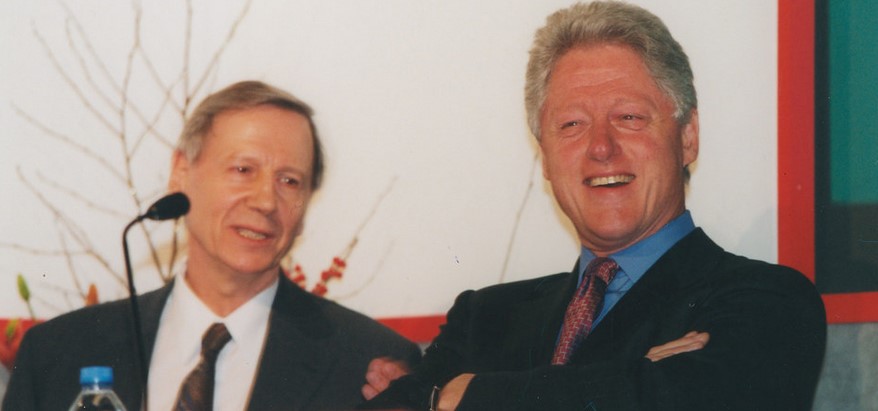
The Third Way philosophy began to emerge once he published “The Consequences of Modernity” in 1990. Throughout the 1990s, Giddens continued to produce a detailed road map showing his future acolytes the route which led to the Third Way. Giddens’ influence on the presidential campaign of Bill Clinton became immediately apparent. In a New York Times article from 26th of September 1992—while current UK Home Secretary Yvette Cooper was working on the Clinton campaign—entitled: “Clinton Says He’s Not Leaning Left but Taking a New ‘Third Way’,” Michael Kelly states:
“Ever since the lesson of his first, and last, gubernatorial defeat Mr. Clinton has positioned himself as a centrist, and the idea of third-way politics is at the heart of his vision of himself and of a resurgent Democratic Party. For years, the Arkansas Governor has been an active player in the somewhat vaguely defined school of policy and politics that seeks to escape the left-right boundaries formed 60 years ago.”
Clinton’s promise of a new way during the 1992 US presidential race resonated with voters who were utterly fed up of the same old left/right political dynamic which had been the prevailing order. However, in many ways, they were buying into snake oil politics, with promises to prioritise social justice, without explaining the means of how to achieve social justice. The offer of resolutions to problems without the proposition of practical solutions is a central theme of Third Way politics, some may call it simply “lying to the electorate”. Regardless, disenfranchised voters respond well to pipe dream promises, and Bill Clinton’s victory was to inspire a young Labour elite who were already being trained in the United States.
The transformation of The Labour Party policy under Tony Blair before the 1997 election was to define what we now refer to as “New Labour”, however, the only thing new about the Labour Party under Blair was their incorporation of Third Way politics. During the introduction to a Norberto Bobbio book published in 1996 called, “Left and Right : The Significance of a Political Distinction”, author Allan Cameron, states:
“In Britain, the strategy of ‘New Labour’ seems almost modelled on Bobbio’s definition of a third way based on submerging the left/right distinction and somehow transcending it — an often repeated tactic which, according to Bobbio, can never actually be put into practice, whatever its efficacy as a means of survival when the other side appears to be particularly in the ascendant.”
Essentially, there are many examples of a Third Way being used to marry up centre-ground beliefs which are distinctly similar, even though elements of those political groupings express views which are diametric opposites. And that is really what the Third Way achieves, it is a recipe to suppress and deny the voices of those voters who hold political views which are diametrically opposed to a centrist political ruling elite.
Within the aforementioned book, Bobbio himself explains:
“In political debate the ‘inclusive middle’ is usually presented as an attempt at a third way — that is to say, as something which transcends the politics of left and right, unlike the centre, which is simply in between the left and the right. In practice, the third way is in the centre; but in theory, it claims not to be a compromise between two extremes, but to supersede them both, and therefore it accepts and suppresses them at the same time (in contrast to the ‘included middle’, which rejects and separates). It is not, then, a mediated third, but a transcended third, where the first and second entities are brought together in their interdependence and suppressed as unilateral assertions, rather than being separated and left to survive in opposition to each other. Every middle entity presupposes the existence of the other two entities, but the ‘included middle’ realizes its own essence by driving them out, and the ‘inclusive middle’ by feeding off them. The ‘included middle’ is essentially practical politics without a doctrine, whereas the ‘inclusive middle’ is essentially a doctrine in search of a practical politics, and as soon as this is achieved, it reveals itself as centrist.”
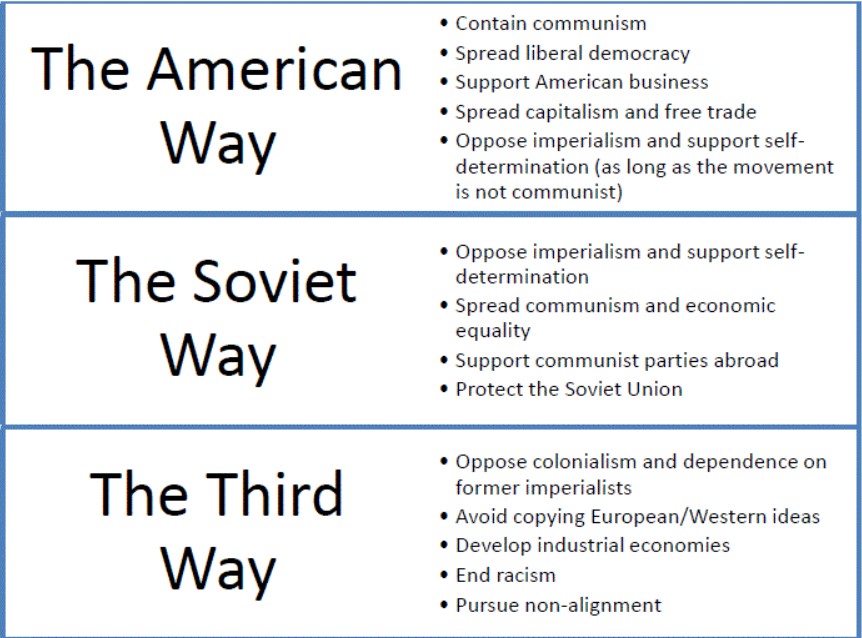
In the same book, Bobbio goes on to posit that the Third Way is often used to marry up the contradictions between the left and the right of politics in relation to green issues, while even being implemented in an attempt to bridge the divide between socialism and liberalism. However the Third Way is implemented, suppression of voices always follows soon after. The Third Way was used like personal political plasticine by Clinton and Blair, the gaps between ideologies would be filled by the leaders’ own personal whims, wants, or desires. Tony Blair believed his political mandate gave him implied consent to apply his own personal values and principles whenever rapid change occurred. Third Way politics allowed such a dictatorial desire to be achieved.
Blair himself states this clearly in a document he wrote alongside Gerhard Schroeder, entitled, “Europe: The Third Way/Die Neue Mitte”, which was produced by the Friedrich Ebert Foundation’s South African Office, where Blair said:
“The politics of the New Centre and Third Way is about addressing the concerns of people who live and cope with societies undergoing rapid change – both winners and losers. In this newly emerging world people want politicians who approach issues without ideological preconceptions and who, applying their values and principles, search for practical solutions to their problems through honest well-constructed and pragmatic policies. Voters who in their daily lives have to display initiative and adaptability in the face of economic and social change expect the same from their governments and their politicians.”
We can see many examples of how Blair incorporated his own values and principles into his political actions while in office. This included the forming of an unrestrained “special relationship” with the United States, which led to various joint military actions, and the War on Terror as a whole. Blair’s government lied to the electorate, suppressed information, increased surveillance, and all supposedly in the name of freedom.
An Honest Man
After the 1992 General Election resulted in victory for John Major’s Conservatives, Neil Kinnock stood down and John Smith was soon after elected leader of the Labour Party. Although the income tax plan which had apparently scuppered Labour’s chance to take power had been designed by John Smith himself, he was seen as a safe pair of hands. As previously mentioned, Smith was not a fan of Clinton’s leftist brand of Fabian-style Globalism, reportedly telling Peter Mandelson:
“I know what their game is! Well, I can tell you that we don’t need any of this fucking Clinton stuff over here. They’re just drawing attention to themselves and rocking the boat.”
However, while John Smith was in charge of the Labour Party, the next generation—who would eventually go on to design New Labour—were busy throwing in their lot with the American globalists.
John Smith was a consummate professional. He knew that Labour would be able to challenge at the next General Election if they focussed on where the Conservatives were weakest, even before their weaknesses had become defining issues. For example, his first speech in Parliament targeted the European Exchange Rate Mechanism, which was a determining factor in the following General Election. Smith was constantly on the attack, and his attacks were very successful. Smith often used comedy to make his points. He described John Major and Norman Lamont as the “Laurel and Hardy of British politics”; he told Labour members at a Sheffield rally that the Conservatives would have a box office disaster with “Honey, I Shrunk the Economy”; and in a 1993 debate he hit out at John Major stating: “the man with the non-Midas touch is in charge. It is no wonder that we live in a country where the Grand National does not start and hotels fall into the sea”.
While Smith was the Labour leader, the party continuously led in the polls. The week before Smith died, the Conservatives were savaged in the local council elections, where they suffered their worst defeat in over 3 decades. By May 1994, John Smith’s Labour Party had a massive 23-point lead in the polls, ahead of a severely flagging Conservative Party. Even though the British economy was steadily recovering, Labour was expecting to take power in the next General Election. That was before tragedy struck. The aforementioned Alwyn W. Turner also mentions Labour’s path to victory under John Smith as being set in stone, stating:
“The feeling that there was no need for a change in direction was supported, as it happened, by the very polls that Prescott professed to despise. In the last opinion poll published before Smith’s death in May 1994, Labour stood at 45.5%, with the Liberal Democrats and Conservatives neck-and-neck, more than twenty points behind. The assumption on behalf of the electorate was that Labour could, almost certainly would, win the next election and that Smith was a serious leader.”
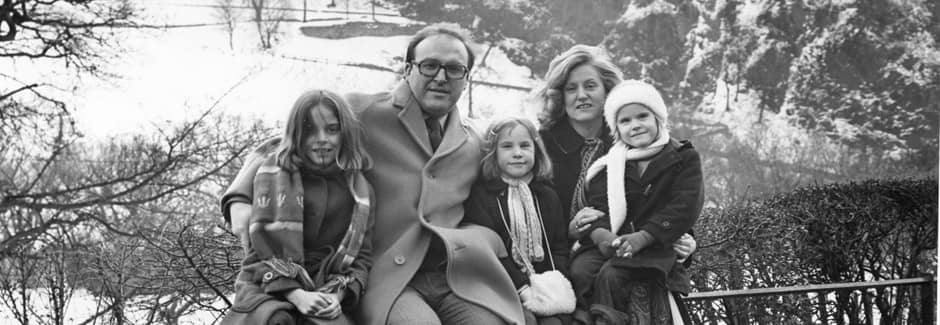
John Smith previously had a heart attack on 9th of October 1988, and afterwards, he changed his lifestyle considerably. He reformed his diet, gave up smoking, and took up hiking in the Munro mountains of Scotland. He lost almost 3 stone, and it appeared that he was a much healthier man in general. However, on the 12th of May 1994, Smith suffered a fatal heart attack at his flat in Central London. The unexpected death of a beloved Labour leader led to a showdown ensuing between Tony Blair and Gordon Brown for the leadership of the party. According to some sources, the two World Economic Forum Global Leaders for Tomorrow, and International Visitor Leadership Program alumni, made a backroom deal which meant Blair became Prime Minister under the condition that Brown became chancellor and that he’d be given total control over the economy.
Although Blair and Brown won their 1997 election in a landslide, John Smith’s biographer believed that Smith was on course to win a similar, if not slightly reduced, majority. But this was not John Smith’s Labour Party any more. This was Blair’s freshly rebranded New Labour, built in the image of Bill Clinton’s Democrats, and manned by like-minded Fabians who were ready to pivot away from the interest of the British people, and towards supporting American-style militaristic Globalism.
The epitaph on John Smith’s grave reads:
“An honest man’s the noblest work of God.”
The Rise of the Young Global Leaders
The Labour Party’s politics were never to be the same once John Smith was dead and buried. Blair and Brown surrounded themselves with like-minded Globalist politicians, many of whom had cut their teeth studying under the Democratic Establishment in the US.
Yvette Cooper and Ed Balls were central to selling out British governance in exchange for pre-packaged globalist ideology from the same think tanks and public policy institutes which had been created and designed by the American intellectual elites of Harvard three decades prior. Yvette Cooper and Ed Balls also completed the World Economic Forums Young Global Leaders program, and, by the time Ed Balls became a part of New Labour, he had begun to believe in the importance of the saleability of economic policy, rather than the merit. Like most of the new wave of those in the Labour rank and file, Balls became obsessed with spin doctoring, Globalism, and Third Way politics.
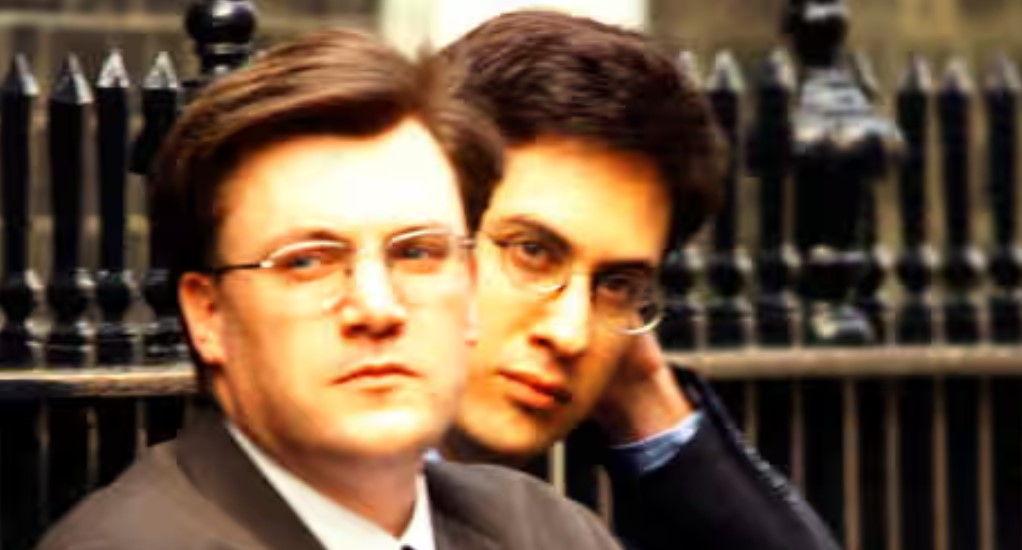
David and Ed Miliband had both previously lived in America due to their father’s work, with the former studying at MIT, while the latter joined Yvette Cooper in 1993 to work for Harriet Harman as part of Labour’s Shadow Treasury team. John Prescott was part of this new wave too, although his opinion appears to be a lot more objective than the rest of the freshly formed New Labour elite.
These personalities became central to creating a Great Britain with two main functions: They began to introduce the fundamental tenets of American-led Globalisation into UK Government policy; and they began to support American wars, regardless of whether it was a benefit to the United Kingdom, and whether or not they were legal under international law. Tony Blair, alongside his number one spin doctor Alistair Campbell, used the poorly designed propaganda of the infamous “dodgy dossier” to take the British people to war in Iraq. This era of politics saw the new British Labour elite synthesising politically with the American elite who had trained and mentored the main movers and shakers of Blair’s government.
The United Kingdom as a whole was never to be the same. Blair soon normalised the installation of World Economic Forum-trained leaders into parliament. From the first global leadership course which saw Blair and Brown trained via a program which was originally designed and brought to fruition via a CIA-funded operation based in Harvard, the British people have seen the allegiance of their elected politicians lurch from Westminster to Davos. Since then, the American intelligence-linked Globalist training mill has become a standard route for most of the leaders who are offered to us in General Elections.
Some of our leaders who were trained via the World Economic Forum’s Young Global Leader program, and its precursor includes: Tony Blair; Gordon Brown; Ed Balls; Yvette Cooper; Ed Miliband; David Cameron; William Hague; Liz Truss; Boris Johnson; and Rishi Sunak, and this will continue to be the case until we take back control of our political institutions. When the BBC’s Emily Maitlis posed the basic dilemma to Labour leader Keir Starmer: “Parliament or Davos”, the Labour Leader did not hesitate to say “Davos”. Although, with the current level of globalist policy infiltration in UK politics as it is, there is very little difference between Parliament and Davos. Since then, Keir Starmer has become Prime Minister of Great Britain, with a seemingly unlimited mandate.
It should also be noted that the WEF’s Young Global Leader program is not the only way in which foreign governments and intelligence agencies penetrate our cabinets. American deep state, intelligence-linked leadership programs such as the International Visitor Leadership Program have also been responsible for moulding our political elite, including Prime Ministers like Ted Heath; Margaret Thatcher; Gordon Brown; and Tony Blair.
Almost 30 years passed by before the Labour Party were able to win a landslide victory reminiscent of Blair’s 1997 election result. In this case, to marry up the centre ground, Keir Starmer’s Labour Party has had to decimate the left wing of their base by way of a publicly enacted purge. The party leadership have had to denounce core leftist values to allow Keir Starmer to become Prime Minister of the United Kingdom, under what appears to be a centrist banner. However, on this occasion, the void which will be created by the suppressive nature of Giddens’ Third Way politics will be filled, not with Keir Starmer’s personal values and principles—as was the case with Blair—but, rather, by the introduction of Globalist public policy directly donated to them by Davos and, most worryingly, an increasingly authoritarian national security state infrastructure.
There are consequences to the suppression of voices. When the mainstream political parties of the left and right moved into the centre ground, they became indistinguishable from each other, an almost perfect representation of a “Uniparty”. This has increased the divide on the right, with the fracturing of the Conservative Party and the emergence of the Reform Party led by Nigel Farage. We can be sure that, as the centre ground ascends again under Keir Starmer, a new political force will also emerge on the left of British politics to cater for the voices suppressed by Third Way ideology.
Tony Blair himself has not stopped pushing the globalist agenda on the British electorate, and this shouldn’t surprise anyone, because when Tony Blair took office, he had already been forged into the archetypal young global leader. He was trained by American Fabians, with a policy agenda which betrays his allegiance to his true masters: the prevailing global order. The violent unrest which accompanies Third Way politics is a perfect tool to manufacture consent for the expansion of the surveillance state, restricting freedom of the press, while they implement an agenda which may be impossible to reverse.
The implementation of the Globalist agenda will require a reformation of our entire society, not just in Britain and America. The people of the world are being purposely divided. Our voices are being systematically censored and silenced. Many of us have lost our political homes. Our cultures are under attack. Our national values are disposable.
Regardless of whether or not those in power admit it, we are being redesigned, we are being replaced, we are being RESET…
YOU CAN SUPPORT THIS WORK ON PATREON >>> Become a Supporter Now!
N.B. Darren Kenton was super important to the creation of this article. His research has been superb, and it could not have been anywhere near as informative without his help. Darren Kenton is a scholar and a gent.




 NEWSPASTE
2 responses to “Blair and Clinton: The Third Way Dossier”
[…] For many years, I have been unwittingly preparing to write this piece and a bulk of my previous investigations will intersect with this article. For those who aren’t aware, I have written extensively about Jeffrey Epstein’s influence on leading politicians and scientists; I have revealed previously unknown details behind the rise of Jeff Bezos; I have mapped out the history of modern Globalism; and I have written about the political influences behind such infamous leaders as Bill Clinton and Tony Blair. […]
LikeLike
[…] For many years, I have been unwittingly preparing to write this piece and a bulk of my previous investigations will intersect with this article. For those who aren’t aware, I have written extensively about Jeffrey Epstein’s influence on leading politicians and scientists; I have revealed previously unknown details behind the rise of Jeff Bezos; I have mapped out the history of modern Globalism; and I have written about the political influences behind such infamous leaders as Bill Clinton and Tony Blair. […]
LikeLike